
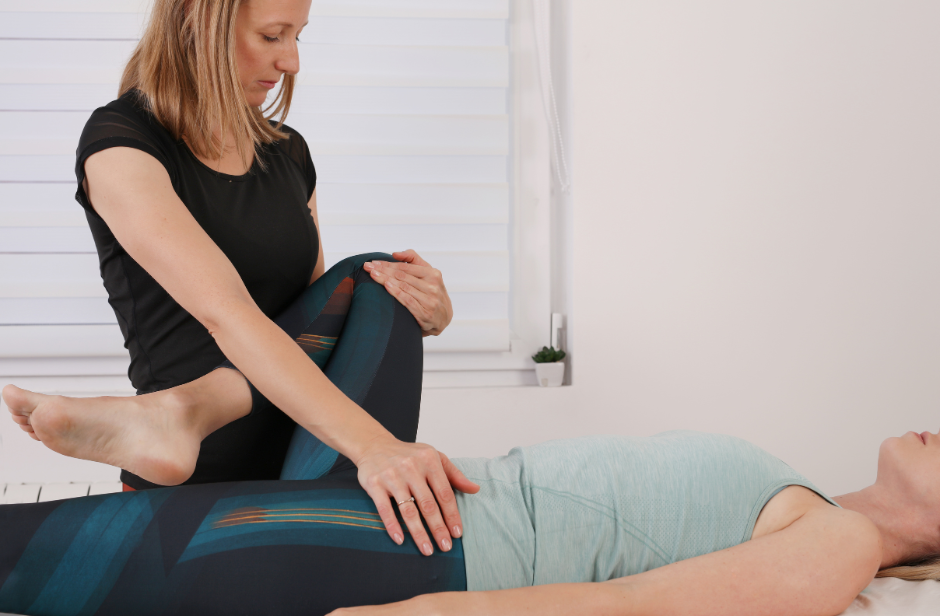
Pelvic floor physiotherapy is a specialized branch of physiotherapy focused on the muscles, ligaments, and connective tissues that support the bladder, uterus (or prostate), and bowel.
It helps restore strength, coordination, and relaxation in this vital group of muscles — which play a key role in posture, core stability, continence, and sexual health.
Pelvic floor therapy goes beyond simple “Kegels.” It uses evidence-based manual therapy, exercise, breathwork, and education to help you move, recover, and live without pain or leakage.
Your pelvic floor is a group of muscles that form a hammock-like support at the base of your pelvis.These muscles work in coordination with your core system, which includes:
Together, this group acts like a pressure-regulating cylinder that supports movement, stability, and continence.When all these parts work together, you can breathe, move, lift, and laugh without worry. When they don’t — pain, weakness, or leakage can occur.
Pelvic floor dysfunction can happen when the muscles become too weak, too tight, or out of sync with your breathing and posture.
Pelvic floor physiotherapy is effective for a wide range of conditions in women, men, and individuals of all ages.
Here are some of the most common:
Bladder & Bowel Dysfunction
Pelvic Pain Conditions
Postpartum & Gynecological Conditions
Other Conditions
1 Initial Assessment
Your first visit is one-on-one and private. It typically includes:
Note: An internal exam is never mandatory — your comfort and consent come first. External assessment can be done but treatment plan is global and not targeted which may compromise outcomes or effectiveness.
2 Treatment and HEP set up as needed
This session is to provide full initial treatment and set up of your home exercise program.
Your personalized treatment plan may include:
Sessions are typically 45–60 minutes for individualized care and follow-up progress.
3 Follow UP :
Depending upon your condition and assessment, your therapist will recommend follow up sessions.
Recovery timelines vary widely depending on: the nature of your condition, how long it has been present, your commitment to home exercises/lifestyle change, and other health factors. As a guide:
It’s important to emphasise that this is a process—not a “one-visit fix”—and that progress may be gradual, but consistent work often leads to meaningful change.
While pelvic floor physiotherapy is effective for many, there are a few reasons why it may not reach full expected outcomes (or may require more time):
In these cases, your physiotherapist may collaborate with gynecologists, urogynecologists, or other specialists for a multidisciplinary plan or alternate treatment options
Pelvic floor physiotherapy is not just about muscles — it’s about restoring coordination, strength, and core connection. Whether you’re postpartum, peri-menopausal, or struggling with long-term symptoms, healing is possible with the right assessment, guidance, efforts and persistence.
Our priority is your health. We understand that everybody, every injury and every recovery journey is different. We guarantee to provide you with the best possible care with all the time and efforts you deserve.
Monday : 7:00 AM – 8:00 PM
Tuesday : 7:00 AM – 8:00 PM
Wednesday : 7:00 AM – 8:00 PM
Thursday : 7:00 AM – 8:00 PM
Friday : 7:00 AM – 8:00 PM
Saturday : 10:00 AM – 3:00 PM
Sunday : Closed
Our priority is your health. We understand that everybody, every injury and every recovery journey is different. We guarantee to provide you with the best possible care with all the time and efforts you deserve.